
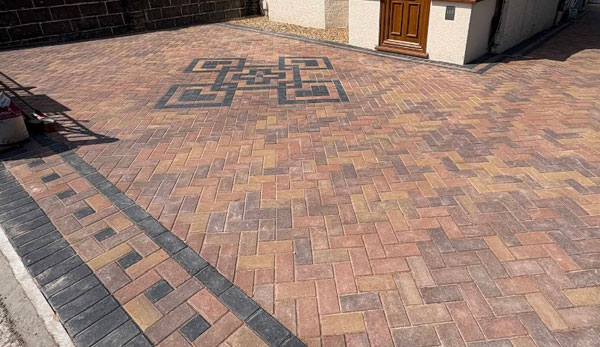
If you’ve ever looked at a freshly paved driveway and thought, “That looks solid, how different can paving really be?” you’re not alone.
It’s a common assumption across the UK. But the truth is, residential paving and commercial paving are built for very different jobs, even if they sometimes look similar on the surface.
As experienced residential paving contractors, this is a question we hear all the time from homeowners and property managers.
“Do I need residential paving, or does commercial paving make more sense for my property?”
Let’s break it down in plain English.
Why the Difference Actually Matters
In the UK, paving has to deal with a lot. Rain, frost, delivery vans, parked cars, foot traffic, and sometimes all of the above in the same week.
According to the UK Met Office, freeze and thaw cycles are one of the biggest causes of surface wear and cracking in paved areas. https://www.metoffice.gov.uk/weather/climate/uk-climate
That’s why choosing the right type of paving is not just about appearance. It’s about safety, durability, and long term value.
What Is Residential Paving?
Residential paving is designed specifically for homes. Think driveways, garden paths, patios, and small private parking areas.
“It’s paving that needs to look good every day, not just survive heavy traffic.”
Common Residential Paving Features
- Designed for cars, not constant heavy vehicles
- Focus on kerb appeal and finish
- Wide range of styles and materials
- Installed with homeowner budgets in mind
Materials often include block paving, tarmac, gravel, resin bound surfaces, and decorative concrete.
This type of paving works perfectly for houses, bungalows, and small residential developments.
What Is Commercial Paving?
Commercial paving is built for performance first and appearance second.
“It’s not about looks alone, it’s about strength and safety under pressure.”
Commercial paving is used for places like:
- Car parks
- Retail parks
- Industrial units
- Schools and hospitals
- Office premises
Common Commercial Paving Features
- Thicker base layers
- Stronger materials
- Designed for constant traffic
- Focus on load bearing and drainage
Materials often include heavy duty tarmac, reinforced concrete, and industrial block paving systems.
Residential vs Commercial Paving at a Glance
| Feature | Residential Paving | Commercial Paving |
| Main Use | Homes and private spaces | Businesses and public areas |
| Traffic Load | Light to moderate | Heavy and constant |
| Appearance | Decorative and personalised | Practical and durable |
| Base Depth | Shallower | Deeper and reinforced |
| Cost | Lower overall | Higher due to materials |
FAQs
What is the main difference between residential and commercial paving?
The main difference is load and usage. Residential paving is designed for cars and light traffic, while commercial paving must support frequent and heavy vehicle use.
Can residential paving be used for a business?
In most cases, no. Residential paving usually does not have the structural strength required for commercial use and may fail prematurely.
Is commercial paving more expensive?
Yes. Commercial paving generally costs more due to thicker foundations, stronger materials, and stricter safety requirements.
Who should install residential paving?
Always choose experienced residential paving contractors who understand local ground conditions, drainage regulations, and material performance in the UK climate.
You can view professional residential driveway solutions here: https://stonecrosspavingltd.com/driveways/
Final Thoughts
Choosing between residential and commercial paving comes down to one simple question.
“How will this surface be used every day?”
If it’s your home, driveway, or private outdoor space, residential paving offers the right balance of strength, appearance, and value. If it’s a business or public area, commercial paving is essential for safety and durability.
“When paving is done right, you don’t think about it. You just trust it to do its job, year after year.”