
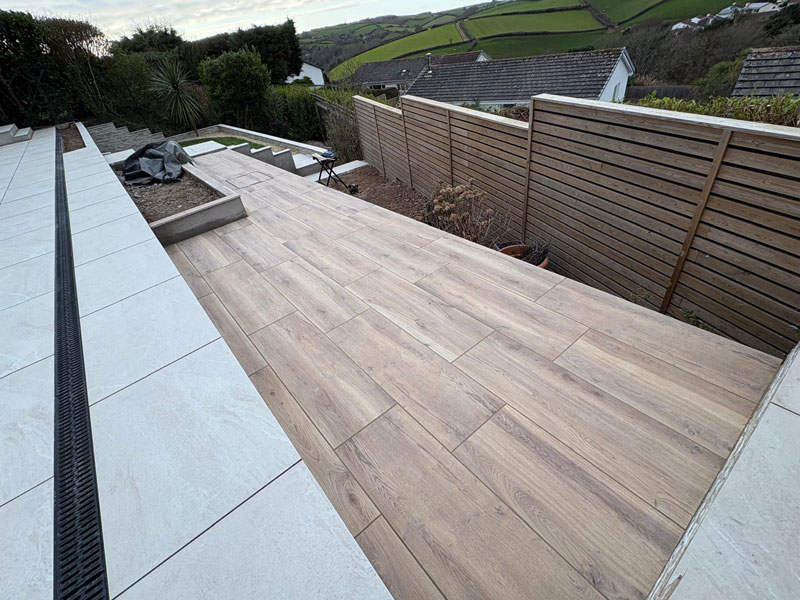
A new fence sounds like a simple job until you’re standing in the garden with a wonky post, quick-set concrete going off in the bucket, and a panel that somehow looks straight… until you step back.
If you’re weighing up DIY fencing vs hiring a fencing contractor in Plymouth, this guide will help you decide based on what matters: cost, time, finish, safety, and how well it stands up to Plymouth weather (windy corners and soggy ground included).
First, what does fencing typically cost in the UK?
As a rough benchmark, one UK pricing guide puts the average installed cost at about £110 to £120 per metre for a typical garden fence (materials + labour).
If you’re looking at panel fencing, another guide quotes around £45 per fence panel, plus posts and other materials.
Those numbers won’t match every job (closeboard, feather edge, concrete posts, gates, awkward access all change the price), but they’re useful for comparing DIY and contractor quotes.
DIY fencing in Plymouth: when it’s worth it
DIY can be a good shout if your job is small and straightforward.
DIY usually makes sense if:
- You’re replacing one or two panels, not the whole boundary
- The ground is flat and easy to dig
- You don’t need a gate moving or resetting
- It’s an internal garden divide (not the main boundary)
- You already have tools (post hole digger, level, string line, saw, mixer)
What you can realistically save
DIY mainly saves labour. Materials still cost what they cost, and by the time you add concrete, fixings, gravel boards, and waste removal, the “big saving” can shrink.
Example (rough only): 10 metres of panel fencing
- Hiring a contractor: 10m × £110–£120 = £1,100–£1,200
- DIY materials (basic guide): panels ~£45 each, posts and extras on top
DIY might come out cheaper, but only if:
- You don’t need tool hire
- You don’t hit buried rubble/roots
- You get the alignment right first time
- You don’t have to redo posts after a windy week
Where DIY often goes wrong (and costs more later)
This is what we see most often with DIY fences:
1) Posts not deep enough (or not braced while setting)
A fence can look fine on day one, then start leaning after the first proper gust. Plymouth gets plenty of those.
2) Panels installed without proper level lines
If you don’t run string lines and measure consistently, panels “step” awkwardly or drift off line.
3) Not allowing for ground slope
Sloping gardens need either stepping panels cleanly or raking the fence line properly. That’s fiddly even for confident DIYers.
4) Skipping gravel boards where needed
In damp ground, timber in contact with soil is a faster route to rot. Gravel boards (or the right detailing) help.
5) Underestimating the mess
Old posts, broken concrete, and waste soil add up fast. If someone is taking waste away as part of the job, they must be properly registered.
Safety: it’s not “dangerous”, but it’s not nothing either
Fence panels, posts, and bags of ballast are heavier than they look, especially when you’re twisting in a tight gap between shed and hedge.
The HSE’s manual handling guidance is aimed at workplaces, but the basics apply at home too: keep loads close, avoid twisting, and plan lifts properly.
If you’ve recently had a back issue, you’re doing it solo, or access is awkward, that’s often the point where hiring a contractor is simply the smarter move.
Planning rules: do you need permission for a new fence?
Most of the time, no. But height and location matter.
Planning Portal guidance says you can usually put up a fence without permission as long as:
- It’s no more than 1 metre high if it’s next to a highway (including footpaths), and
- No more than 2 metres elsewhere.
Also, if you’re in a conservation area, near a listed building, or your permitted development rights are restricted, you may need to double-check.
A local contractor will usually flag the common pitfalls straight away.
Hiring a fencing contractor in Plymouth: when it’s worth it
Hiring a pro is usually worth it when the job needs to be right the first time, especially on boundary lines.
Hiring is usually the better option if:
- It’s your main boundary fence (privacy/security)
- The ground is uneven, wet, or full of roots/rubble
- You’re using concrete posts and gravel boards
- You need a gate fitted properly (alignment matters)
- You want it done quickly (without losing weekends)
- Access is tight and materials need moving carefully
And honestly, if your garden is part of a bigger refresh (patio, turfing, garden walls, power washing, exterior painting), using one local team can keep everything consistent and reduce delays.
For example, Stone Cross Paving Ltd is Plymouth-based and lists fencing alongside patios, driveways, turfing, garden walls, power washing, and exterior painting, with a 5-year guarantee and free quotes.
“But contractors are expensive” – here’s what you’re paying for
A good fencing contractor is not just selling labour. You’re paying for:
- Correct line, levels, spacing, and bracing
- Proper post depth and solid setting
- The right materials for UK weather exposure
- Speed (a team can do in a day what DIY takes a weekend)
- Accountability, plus warranty/guarantee in writing (Stone Cross Paving Ltd)
How to choose the right fencing contractor in Plymouth
Use this as your shortlist checklist.
Ask these questions:
- What fence type do you recommend here and why? (closeboard, feather edge, panels, concrete posts)
- How will you handle the slope? (stepped vs raked)
- What’s included in the quote? Posts, gravel boards, concrete, fixings, gate hardware, removal of old fence
- Who removes the waste and are you registered? You can check the Environment Agency register.
- What guarantee do you provide and what does it cover?
- Can I see recent local work? Photos are fine, local references are better
Red flags:
- Pressure for “today only” pricing
- No written quote
- Vague answers about posts, depth, or waste disposal
- Cash-only insistence without paperwork
So, DIY or hire?
Here’s the simplest way to decide.
DIY if:
- It’s a small job (1–2 panels)
- Flat ground, easy access
- You’ve got tools, time, and patience
- You’re happy with “good enough”
Hire a fencing contractor in Plymouth if:
- It’s your boundary fence
- The site is sloped, exposed, or messy
- You want a gate fitted properly
- You want it done fast and to last
- You don’t want to deal with waste, digging, and rework