What affects the cost of a driveway in Plymouth?
- Driveway size
This is the obvious one. A 20m² driveway will cost less than a 60m² driveway, but larger driveways do not always increase in a perfectly straight line. Some costs, such as machinery, waste removal and setup, may apply regardless of size.
- Existing surface removal
Removing old concrete, broken paving, weeds, rubble or tarmac can add labour and disposal costs.
A driveway that looks simple may still have a lot of hidden material underneath. Old concrete, thick roots or poor previous repairs can all affect the price.
- Ground condition
Soft ground, clay soil, poor drainage or uneven levels can increase the amount of preparation needed.
In Plymouth and the South West, damp ground is common. That makes proper sub-base work especially important.
- Drainage
Drainage should never be treated as an optional extra.
If rainwater runs towards the house, across the pavement or into the road, it can cause practical and planning issues. UK guidance explains that front garden driveways over 5m² may need planning permission if they use impermeable surfacing and do not direct water to a permeable area.
External reference:
GOV.UK permeable surfacing guidance
A good driveway quote should explain where water will go.
- Edging and borders
Strong edging helps hold the driveway together. Without proper edge restraints, block paving can spread, gravel can move and tarmac edges can break down.
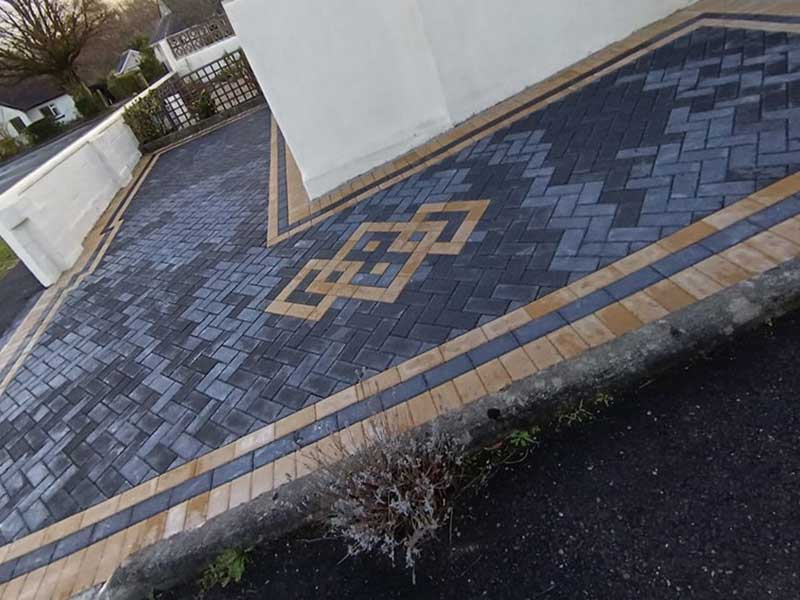
Decorative borders can also improve appearance, but they may add to the overall cost.
- Access
If the property has tight access, steps, narrow lanes or limited parking for materials, labour time can increase. This is common in parts of Plymouth where front gardens are small or streets are narrow.
- Finish and design detail
Simple driveways usually cost less. Patterns, borders, curves, steps, drainage channels and decorative features add time and skill.
That does not mean you should avoid detail. It just means it should be planned and priced clearly.