
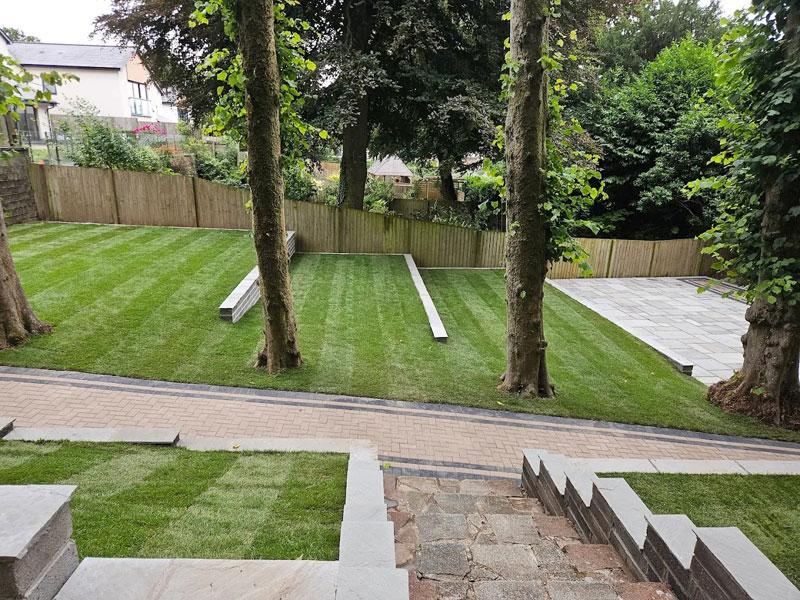
Most people decide they want a new lawn in spring. That’s when the garden centres fill up and the sun comes out. It’s also, frustratingly, one of the harder times to lay turf successfully.
The short answer: autumn is the best time to lay turf, and in the mild South West it’s usually the easiest window of the year. Here’s how the seasons compare in Plymouth, Devon and Cornwall, and what actually decides whether a new lawn takes.
The short answer from the experts
The RHS recommends laying turf in mid-autumn, and says it can be laid any time from mid-autumn to early spring, as long as the soil isn’t too wet or frozen. It advises against laying from mid-spring to early autumn, because turf struggles to establish in hot weather and needs repeated watering.
That lines up with what we see on jobs. Turf laid in autumn roots in quietly. Turf laid in a dry June needs babysitting.
Season by season in the South West
Autumn (roughly September to November): the sweet spot
The soil is still warm from summer, the air is cooler, and rain does a lot of the watering for you. Roots grow into the soil below before winter slows everything down. On most Plymouth and Devon plots, this is when we’d recommend booking turfing.
Winter (December to February): possible, with conditions
Turf can go down in winter, but only on days when the ground isn’t frozen or waterlogged. The South West’s milder winters mean there are often workable spells. The bigger risk here is wet, heavy ground that can’t take foot traffic or a roller without being churned into mud.
Spring (March to April): good, if you can water
Early spring works well. The catch is that a dry spell in late spring can dry out turf that hasn’t rooted yet, so you need to be ready to water regularly.
Summer (May to August): the hardest season
It can be done, but newly laid turf in warm weather needs watering often, sometimes daily. Gaps open between rolls if they dry and shrink. If summer is your only option, plan around a hosepipe and someone at home.
Timing matters less than preparation
Here’s the part most guides rush past. The RHS notes that soil preparation is just as important for turf as for seed. In our experience it’s the single biggest reason a lawn thrives or fails.
Good preparation typically means:
- Clearing old grass, weeds and stones
- Fixing drainage problems before anything else, especially on sloping or heavy ground
- Bringing in good topsoil where the existing soil is poor
- Levelling and lightly firming the surface so there are no soft spots
- Raking to a fine, even finish just before laying
Turf laid on poorly prepared ground can look perfect for a month, then yellow, sink in patches, or lift at the joins.
On delivery day
Turf is a living product and doesn’t keep. The RHS advises laying it within a few days of delivery, and if there’s a delay, unrolling it flat so the grass gets light, watering it if dry. Rolled turf left stacked in the sun can yellow quickly.
This is one reason a professional install helps. Delivery, prep and laying are scheduled together, so the turf goes down fresh.
Aftercare for the first few weeks
- Keep it moist until it roots. In autumn, rain often handles this; in spring and summer you’ll need a hose.
- Stay off it as much as possible while it establishes.
- First mow: the RHS suggests mowing with the blades set high once the turf has rooted well, usually around three weeks after laying.
- Check the joins: if edges start to shrink apart, water more and top-dress gaps with fine soil.
A quick test for rooting: gently lift a corner. If it resists, the roots have taken.
When to call in the professionals
A small, flat patch is a manageable DIY job. It’s worth getting help when the garden slopes, drains badly, needs levelling, or the lawn is part of a bigger makeover with a patio or fencing. Getting levels right next to paving makes a big difference to how the finished garden looks and drains.
Stone Cross Paving lays turf across Plymouth, Devon and Cornwall as part of our turfing service, handling preparation, topsoil and laying in one visit. For budgeting, our landscaping cost guide for Devon gives typical ranges.
Thinking about a new lawn? Autumn is the time to book. Get a free quote and we’ll check your ground and suggest the best timing for your garden.
FAQs
Can you lay turf in the rain?
Light rain is fine and even helps. Avoid laying on waterlogged ground, where walking and rolling compacts the soil and damages its structure.
Is turf or seed better for a new lawn?
Turf gives an instant result and suits families who want to use the garden soon. Seed is cheaper but takes longer to establish and needs more patience.