
TL;DR
If you are looking for reliable driveways pavers in Plymouth, do not choose only by price. A good driveway needs proper groundwork, drainage, strong edging, the right surface material, and a local installer who understands South West weather.
For Plymouth homes, the most common driveway options are block paving, resin bound, tarmac, gravel, and concrete. Each one has different benefits depending on your budget, property style, maintenance needs, and drainage requirements.
Stone Cross Paving Ltd provides driveway installation services in Plymouth, Cornwall, and Devon, including block paving, resin bound driveways, tarmac, gravel drives, concrete, repairs, decorative edging, and power cleaning.
Why your driveway matters more than you think
Your driveway is one of the first things people see when they visit your home. It is also one of the hardest-working parts of the property.
It has to handle cars, foot traffic, rainwater, bins, deliveries, muddy tyres, and daily use. In Plymouth, it also has to deal with wet weather, coastal air, and occasional heavy downpours.
That is why a driveway should not be treated as “just a surface”. A well-built driveway can improve kerb appeal, make parking easier, reduce muddy walkways, and support the long-term value of your home. A poor driveway, on the other hand, can quickly lead to puddles, sinking areas, weeds, loose edges, and expensive repairs.
As a local driveway team, Stone Cross Paving Ltd focuses on driveways that are carefully planned, professionally laid, and built for long-term performance across Plymouth, Cornwall, and Devon.
What do driveways pavers actually do?
The phrase “driveways pavers” is often used by homeowners searching for local driveway installers or paving contractors. A professional driveway paving team should do far more than lay blocks or spread tarmac.
A reliable driveway contractor should help with:
- Site inspection and measuring
- Surface material advice
- Ground preparation
- Drainage planning
- Sub-base installation
- Edging and borders
- Driveway paving or surfacing
- Waste removal
- Finishing and clean-up
- Aftercare advice
The best results usually come from planning before the first dig begins. If the base, drainage, and edges are wrong, even expensive paving will not perform well.
Popular driveway paving options for Plymouth homes
1. Block paving driveways
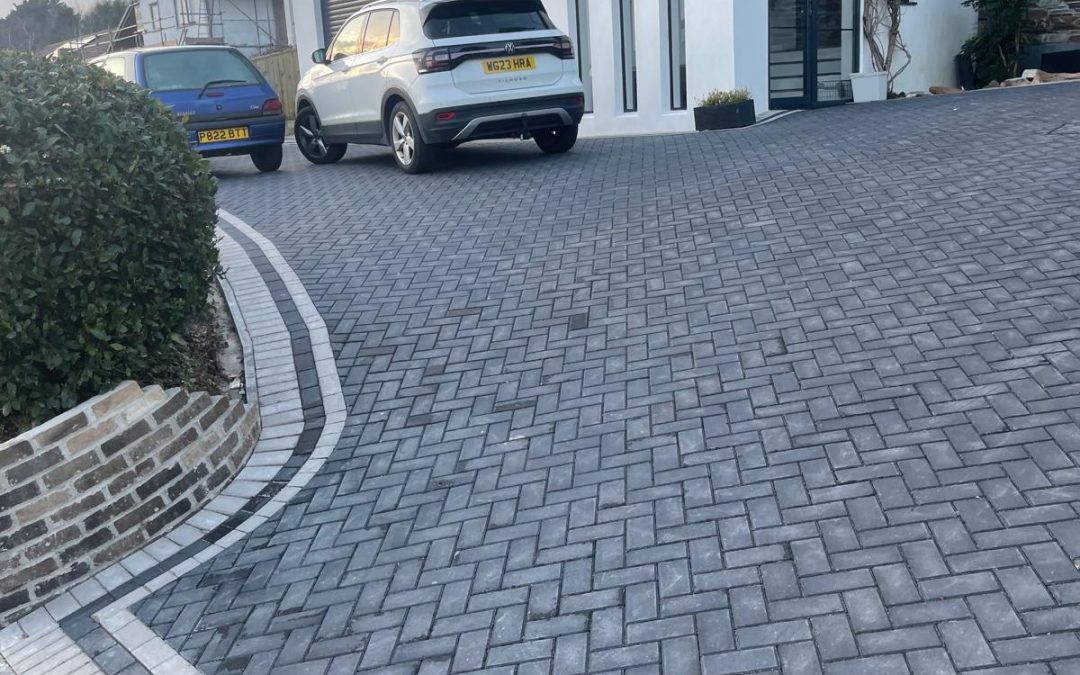
Block paving is one of the most popular choices for UK homes because it offers a smart, traditional look with plenty of design flexibility. You can choose different colours, patterns, borders, and edging styles to suit the property.
Block paving is especially good for homeowners who want kerb appeal and a driveway that can be repaired in sections. If one area settles, individual blocks can often be lifted and relaid rather than replacing the whole driveway.
It works well for:
- Family homes
- Period properties
- Front garden conversions
- Decorative driveway entrances
- Homes where appearance matters
Internal link: Block paving driveways
2. Resin bound driveways
Resin bound driveways are a modern option with a clean, smooth finish. They are popular because they look smart, are low maintenance, and can be permeable when installed as a full suitable system.
Stone Cross Paving Ltd describes resin bound driveways as smooth, stylish, durable, and suitable for homes seeking a long-lasting modern finish. A properly installed resin bound driveway can also help reduce standing water because rain can drain through the surface.
Resin bound driveways are ideal if you want:
- A modern finish
- A low-maintenance surface
- Good drainage
- A wide choice of colours
- A neat, seamless appearance
Internal link: Resin bound driveways
3. Tarmac driveways
Tarmac is strong, practical, and cost-effective. It is often a good choice for larger driveways or homeowners who want a clean, simple surface without lots of pattern detail.
It can suit both traditional and modern properties, especially when finished with block edging or a decorative border.
Tarmac is often chosen because it is:
- Durable
- Cost-effective
- Quick to install
- Easy to maintain
- Good for larger areas
Internal link: Tarmac driveways
4. Gravel driveways
Gravel is one of the most affordable driveway options and gives a natural look that works well for rural homes, cottages, and larger outdoor spaces. It also provides excellent drainage when installed correctly.
However, gravel needs occasional maintenance. Stones may move over time, and sloped driveways can need extra attention to prevent washout during heavy rain.
Gravel works well if you want:
- A natural appearance
- Good drainage
- A lower-cost driveway
- Quick installation
- A traditional countryside feel
5. Concrete driveways
Concrete can be a strong and practical option when installed correctly. It can be kept simple or finished in a more decorative style depending on the property.
Like all driveway surfaces, concrete depends heavily on good preparation and drainage. Poor installation can lead to cracking or surface problems later.
How much does a new driveway cost?
Driveway costs vary depending on the surface, driveway size, access, drainage, excavation, edging, and the condition of the existing ground.
As a general UK guide, new driveway installation commonly ranges from around £60 to £120 per square metre, depending on the material and groundwork required. Gravel is often one of the lower-cost options, while resin bound and block paving tend to sit higher because of materials, preparation, and installation detail.
A simple example:
For a 40m² driveway:
- Gravel may be more budget-friendly
- Tarmac may sit in the middle
- Block paving and resin bound may cost more but offer a more premium finish
The important point is this: the cheapest quote is not always the best value. If one quote skips drainage, sub-base preparation, edging, or proper waste removal, it may cost more later.
Drainage: the detail homeowners should not ignore
In Plymouth and the South West, drainage is one of the most important parts of a driveway project. If rainwater has nowhere to go, you may end up with:- Standing water
- Slippery areas
- Sinking paving
- Gravel washout
- Water running towards the house
- Water flowing onto the pavement or road
- Where the rainwater will go
- Whether the surface is permeable
- Whether drainage channels are needed
- How the driveway falls away from the house
- Whether the design suits your front garden rules
Quote-style advice from a local driveway point of view
“A driveway is only as good as the ground beneath it. Homeowners usually notice the paving, but the real strength comes from the sub-base, drainage, edging, and how carefully the surface is installed.”
This is why experience matters. A driveway can look good on the day it is finished, but the real test comes after heavy rain, winter weather, and daily vehicle use.
A good driveway contractor plans for those conditions from the beginning.
What makes a good driveway installation?
A reliable driveway project should include:
Proper excavation
The old surface, weak soil, or loose material must be removed to create a stable foundation.
Strong sub-base
The sub-base supports the driveway. If it is too thin or poorly compacted, the surface can sink or move.
Correct falls
The driveway should be shaped so water drains away safely.
Good edging
Edges stop block paving, gravel, tarmac, or resin areas from spreading and breaking down.
Suitable material choice
Not every driveway surface suits every property. A good installer will recommend based on your garden, use, drainage, and budget.
Clean finish
A finished driveway should look neat around walls, paths, borders, drains, and entrances.
Choosing the right driveway surface: quick homeowner guide
Choose block paving if:
- You want a premium, decorative look
- You like patterns and borders
- You want easy section repairs
- You want a driveway that suits most UK homes
Choose resin bound if:
- You want a smooth modern finish
- You prefer low maintenance
- You want good drainage
- You like a seamless surface
Choose tarmac if:
- You want a practical and durable surface
- You have a larger driveway
- You want a cost-effective option
- You prefer a simple finish
Choose gravel if:
- You want a natural look
- You need strong drainage
- You have a lower budget
- You do not mind occasional raking and top-ups
Choose concrete if:
- You want a strong, simple surface
- You prefer a clean, solid finish
- You are happy with a more basic appearance unless decorative finishes are added
Practical example: a Plymouth driveway upgrade
Imagine a homeowner in Plymouth has an old cracked driveway with puddles near the front door. The family parks two cars, uses wheelie bins daily, and wants the front of the house to look cleaner.
A professional driveway installer might recommend:
- Removing the old surface
- Installing a proper sub-base
- Creating falls away from the property
- Adding drainage if required
- Using block paving for a smart traditional look, or resin bound for a modern low-maintenance finish
- Adding a neat edge detail to strengthen the driveway and improve kerb appeal
That recommendation is based on how the household actually uses the driveway, not just what looks nice in a brochure.
Why choose Stone Cross Paving Ltd?
Stone Cross Paving Ltd provides professional driveway services across Plymouth, Cornwall, and Devon. The company installs block paving, resin bound, tarmac, gravel, concrete, decorative edging, driveway repairs, slabs, and power cleaning.
Their driveway service is built around:
- Local experience
- Quality materials
- Careful planning
- Professional installation
- Custom design options
- Long-lasting durability
- Low-maintenance finishes
- A 5-year guarantee
Because the team also provides patios, fencing, turfing, garden walls, power washing, and exterior painting, they can help homeowners plan the full outdoor space, not just the driveway surface.
That matters when your driveway connects to paths, walls, gates, front gardens, fencing, or patio areas.
Questions to ask before hiring driveways pavers
Before choosing a contractor, ask:
1. What driveway surface do you recommend for my home?
They should explain why, not just name the most expensive option.
2. How will you prepare the ground?
Ask about excavation, sub-base, compaction, and existing surface removal.
3. How will rainwater drain?
This is especially important for front driveways and sloped areas.
4. Is the quote written and detailed?
A proper quote should explain materials, labour, drainage, edging, waste removal, and timescale.
5. Can I see examples of local work?
Photos of completed projects help you judge quality and finish.
6. Is there a guarantee?
Stone Cross Paving Ltd offers a 5-year guarantee on driveway installations.
7. What maintenance will the driveway need?
Different surfaces need different care. A good contractor should explain this clearly.
Red flags to avoid
Be careful if a driveway contractor:
- Gives only a verbal price
- Does not inspect the ground properly
- Avoids drainage questions
- Cannot explain the surface options
- Offers a very cheap “today only” deal
- Wants full payment upfront
- Does not provide a written quote
- Has no examples of local work
A poor driveway may look acceptable for a few weeks, but problems often appear after heavy rain or repeated vehicle use.
FAQs about driveways pavers
What is the best driveway surface for Plymouth homes?
There is no single best option for every home. Block paving is great for kerb appeal, resin bound is good for a modern low-maintenance finish, tarmac is practical and cost-effective, and gravel is affordable with good drainage.
Is resin bound better than block paving?
Resin bound is usually lower maintenance and gives a smooth modern finish. Block paving offers more pattern choice and is easier to repair in sections. The best option depends on your property and budget.
Do I need planning permission for a driveway?
In many cases, no. If the driveway uses permeable surfacing or rainwater drains to a lawn or border, planning permission is usually not required. For impermeable front garden surfaces over 5m² without proper drainage, permission may be needed.
How long does a new driveway take to install?
Most driveway installations take around 3 to 7 days, depending on the size, surface type, groundwork, drainage, and weather.
How long should a driveway last?
A well-installed driveway can last many years. Longevity depends on the surface type, sub-base, drainage, materials, and maintenance.
Can a driveway improve kerb appeal?
Yes. A clean, well-designed driveway can make the whole front of the property look smarter and more cared for.
Should I get a free quote first?
Yes. A site visit helps the contractor understand the size, slope, access, ground condition, drainage, and best surface option.
Final thoughts
Choosing the right driveways pavers is not just about finding someone to lay a surface. It is about choosing a local team that understands Plymouth weather, drainage, driveway materials, ground preparation, and long-term performance.
A good driveway should be practical, attractive, safe, and built to last.
If you are planning a new driveway, replacing an old surface, or improving your home’s kerb appeal, speak to Stone Cross Paving Ltd for friendly advice and a free quote.
Need trusted driveways pavers in Plymouth?
Visit: https://stonecrosspavingltd.com/driveways/