
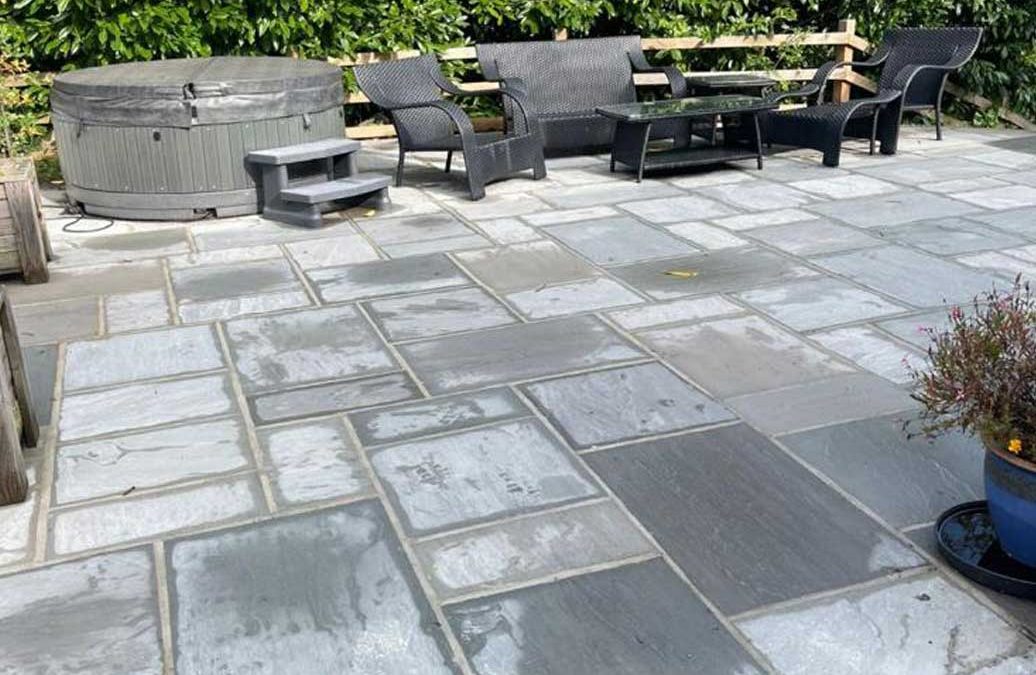
A patio that looked perfectly flat when it was laid can, after a few years, develop a wobble underfoot, a dip you can see water collecting in, or slabs that have shifted slightly out of line. This is one of the more common issues we come across on older patios around Plymouth, and it almost always comes down to what’s happening beneath the surface rather than a fault with the slabs themselves.
Understanding why this happens makes it a lot easier to know whether you’re looking at a small fix or something that needs the patio relaying properly.
What causes a patio to sink or shift?
A patio is only as stable as the base it sits on. If that base was built correctly in the first place, using a proper sub-base and bedding layer, it should hold up for a long time. Most of the movement we see traces back to one of the following.
An inadequate sub-base. Patios laid without enough compacted hardcore underneath, or on ground that wasn’t properly prepared, are more likely to settle unevenly as the ground below shifts over time.
Poor drainage under the patio. If water isn’t able to run off properly, either because the slope is wrong or because the bedding material holds water rather than letting it drain, that trapped moisture softens the ground beneath and causes localised sinking.
Root growth from nearby trees or shrubs. Roots pushing up from underneath can lift individual slabs, while roots drawing moisture away from soil elsewhere can cause the ground to shrink and sink in other spots.
Frost heave. During colder spells, water in the ground beneath a patio can freeze and expand, lifting slabs slightly. When it thaws, the ground doesn’t always settle back exactly as it was, which over several winters can leave a patio noticeably uneven.
Age of the jointing or bedding material. Older mortar bedding can degrade over time, particularly if water has been getting underneath it repeatedly, which loosens the slabs’ grip on the base beneath.
How can you tell if it’s a small fix or a bigger job?
A single slab that’s rocking, while the rest of the patio remains flat and solid, is often a localised issue. It can usually be lifted, the bedding corrected, and relaid without disturbing the whole patio.
A wider dip across several slabs, especially one where water visibly pools after rain, suggests the sub-base itself has settled over a larger area. Patching the surface in that case tends not to last, because the underlying problem hasn’t been addressed.
If more than a small section is affected, or if you notice the same areas getting worse year after year, that’s generally a sign the whole patio needs relaying with proper groundwork rather than repeated spot repairs.
Sloping gardens and the South West climate
Plymouth’s rainfall is higher than much of the country, and a lot of gardens across the city and the wider Cornwall and Devon area sit on some degree of a slope. Both of these things put extra demands on a patio’s drainage and sub-base.
A flat garden with good drainage might tolerate a slightly under-built base for years before problems show. A patio on a sloped garden, or one that regularly deals with heavy South West rainfall, will expose weaknesses in the base much sooner, because there’s simply more water moving through the ground beneath it.
Coastal exposure is worth mentioning too. Salt-laden air and the freeze-thaw pattern common in a maritime climate can accelerate wear on jointing and mortar over time, even on a patio that was well built to begin with.
Practical takeaways
If you notice a slab starting to rock or a shallow dip forming, it’s worth keeping an eye on how it changes over a season rather than assuming it will simply stay the same. Take a photo if you can, so you have something to compare it against later. Clearing leaves and debris away from patio edges and any drainage points, particularly going into autumn, also helps prevent water building up in places it shouldn’t.
When professional help makes sense
A patio with isolated, minor movement is often fine to leave and monitor for a while, provided it isn’t creating a trip hazard. But a patio with a growing dip, standing water in the same spot after every rainfall, or several slabs that have shifted out of alignment is worth having properly assessed. Left alone, water sitting under a patio tends to make the underlying ground softer over time, which usually means the problem gets larger rather than staying the same.
Stone Cross Paving can take a look at what’s happening beneath a patio and explain whether it needs a spot repair or a proper relay with a corrected sub-base.