
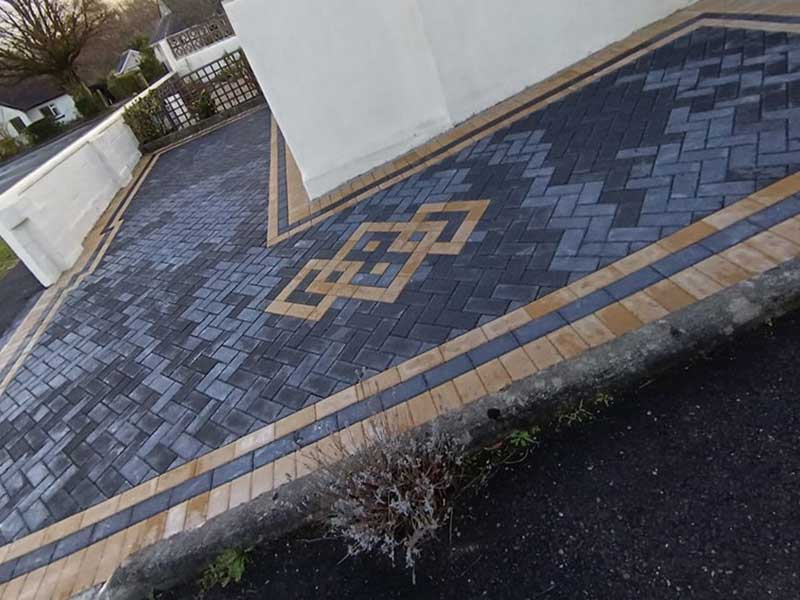
If you live in Plymouth, your driveway has to cope with a bit of everything: long wet spells, salty coastal air, muddy winters, and the kind of “busy driveway” use that comes with school runs, deliveries, and two cars coming and going.
Most coastal parts of Devon and Cornwall typically see around 900 to 1,000mm of rainfall each year, and upland areas can get up to double that. That damp climate is exactly why the “best driveway” isn’t just about looks. It’s about drainage, grip, and how the surface ages after a few winters.
So, block paving vs tarmac, which is better for Plymouth homes?
The honest answer: both can be brilliant when installed properly. The right choice depends on your priorities: kerb appeal, budget, drainage needs, maintenance tolerance, and whether you want a surface that can be repaired invisibly later.
Below is a practical, Plymouth-focused comparison that homeowners can actually use.
Quick summary
Choose block paving if you want:
- Strong kerb appeal and design choice (colours, borders, patterns)
- Easy repairs (replace individual blocks)
- A driveway that suits character homes or “smart front” makeovers
- The option for permeable block paving where drainage rules matter
Choose tarmac if you want:
- A smooth, clean look and lower day-to-day maintenance
- A driveway that is quick to install and easy to use
- A cost-effective surface (especially for larger areas)
- Minimal weeds (compared with joints in block paving)
Cost comparison in Plymouth: block paving vs tarmac
Prices vary by access, excavation, drainage, edging, and whether you are replacing an existing drive. But as a UK budgeting guide:
- Block paving (installed) is often £90 to £130 per m² in 2026.
- Tarmac (installed) is commonly £45 to £80 per m², though “all-in” quotes can rise when excavation, sub-base, and drainage are significant.
A simple way to interpret that:
- Small front drives can end up closer in price than you expect because groundwork costs are similar for both.
- The bigger the driveway, the more tarmac tends to win on budget.
Tip that saves money either way: make sure your quote spells out the full build-up (excavation, sub-base depth, edges, and drainage). A cheaper quote is often cheaper because something important is missing.
How Plymouth weather affects both surfaces
In a wet climate, three things matter more than people think:
- Falls and drainage (where does water go?)
- A solid sub-base (stops sinking and rutting)
- Edges (stops spreading and movement)
As one local contractor blog puts it, “It’s paving that needs to look good every day, not just survive heavy traffic.” That’s the right mindset for Plymouth, because a driveway is always on show.
Block paving: real pros and cons for Plymouth homes
Block paving pros
1) Looks premium and suits most home styles
Block paving can be made to look traditional or modern. Borders and patterns can visually widen a small front drive, which is handy for terraces and narrower plots.
2) Repairs are straightforward
If an area sinks (often due to drainage or base issues), blocks can be lifted, corrected, and relaid. You are not forced into patch repairs that look different.
3) Good grip and easy “refreshing”
With the right block choice and regular maintenance, it performs well in wet weather. If it gets tired, cleaning and re-sanding can bring it back.
4) Permeable options are available
If you are paving a front garden, drainage rules matter. Planning Portal guidance states you typically do not need planning permission if the surface is permeable or water drains to a permeable area. Permeable block paving is one way to achieve that.
Block paving cons
1) Weeds and joint maintenance
Even a well-laid block drive can get weeds in joints over time, especially in damp, shaded Plymouth spots. You are signing up for occasional weed control and re-sanding.
2) More “detail work” means more ways to cut corners
If edge restraints are weak or the sub-base is thin, blocks can spread and sink. Most block paving complaints come back to groundwork, not the blocks themselves.
3) Oil stains can be more noticeable
A slow car oil leak can leave marks that are harder to disguise on lighter blocks.
Tarmac: real pros and cons for Plymouth homes
Tarmac pros
1) Clean, smooth, and practical
Tarmac is simple to live with. Sweeping is easy, and you do not have joints to weed. For families or landlords who want low fuss, this is a big win.
2) Great value for larger driveways
If you have a long drive or a wide frontage, tarmac is often the more budget-friendly route.
3) Fast installation
Tarmac projects can be quicker than block paving because there’s less cutting and detailing.
4) Good for sloping drives when laid correctly
On slopes, the smooth surface can be helpful for keeping gravel and debris from migrating, as long as drainage is designed properly.
Tarmac cons
1) Repairs can show
If a section needs patching later, you can sometimes see the repair. It might be perfectly functional but not perfectly uniform.
2) Edges need proper support
Where tarmac meets soil or borders, weak edges can crumble over time. Good kerbs or edging details matter.
3) It can soften under certain stresses
Heavy vehicles, frequent turning on the spot, or hot summer conditions can cause scuffing or indentations if the build is not right.
Drainage and planning: a key decision point
If you are resurfacing or replacing a front driveway, the rules are worth knowing early.
Government guidance and Planning Portal explain that you generally do not need planning permission if a new or replacement driveway uses permeable surfacing or drains to a permeable area. If you cover more than 5m² with a traditional impermeable surface without managing runoff to a permeable area, planning permission may be needed.
What that means in plain English:
- If drainage is tricky, permeable block paving may be a smart route.
- If you want tarmac, you may need a proper runoff plan (for example directing water to borders, or other drainage solutions) depending on site conditions.
A good installer will talk about falls, runoff direction, and where the water goes before they talk about colours and patterns.
Which suits Plymouth homes best? Common scenarios
Scenario 1: Period home or “kerb appeal upgrade”
If you want a driveway that looks high-end and complements stonework, walls, or a character frontage, block paving usually fits best.
Scenario 2: Busy family driveway, two cars, minimal maintenance
If you want practical, clean, low fuss, tarmac often wins.
Scenario 3: Short, narrow drive where every inch matters
Block paving can be designed to visually open the space and frame parking neatly. Tarmac can also work, but it is less “design-led”.
Scenario 4: Sloped drive that funnels water
Both can work. The deciding factor is drainage design and strong edges. In Plymouth’s rain, “flat and hope” is where problems begin.
Block paving vs tarmac pros and cons checklist
Use this quick scoring idea. Pick the one that gets most “yes” answers for your home.
Block paving is better if you care most about:
- Premium look and design options
- Repairability (swap individual blocks)
- Matching paths, borders, and garden walls
- Permeable options for front gardens
Tarmac is better if you care most about:
- Lowest maintenance day to day
- Best value on larger areas
- Quick, clean installation
- Smooth access for pushchairs, bikes, bins, wheelchairs
What matters more than material: installation quality
Whichever you choose, long-term performance comes down to build quality. A line worth remembering from a Stone Cross article is: “Build it for the weight you expect, then add more.”
Ask your installer to clearly explain:
- How deep they excavate
- What sub-base they use and how they compact it
- How they create falls for drainage
- What edging/kerbs they install
- What warranty or guarantee is included
Stone Cross Paving Ltd notes their driveway installations come with a 5-year guarantee, and they install both block paving and tarmac across Plymouth, Devon, and Cornwall.
Final answer: which is better in Plymouth?
If you want the simplest rule:
- Block paving is often best for homeowners who want kerb appeal, design choice, and easy long-term repairs.
- Tarmac is often best for homeowners who want practicality, speed, and value, especially for larger areas.
And if you want the most “Plymouth-specific” rule:
- In a wet climate, choose the installer and the drainage plan first, then choose the surface.